
Air quality in Albania 2025: GreenAL publishes environmental monitoring results on air, water and noise
Within the framework of the GreenAL project, the results of the 2025 alternative monitoring of air, water, and noise in Albania have been published.
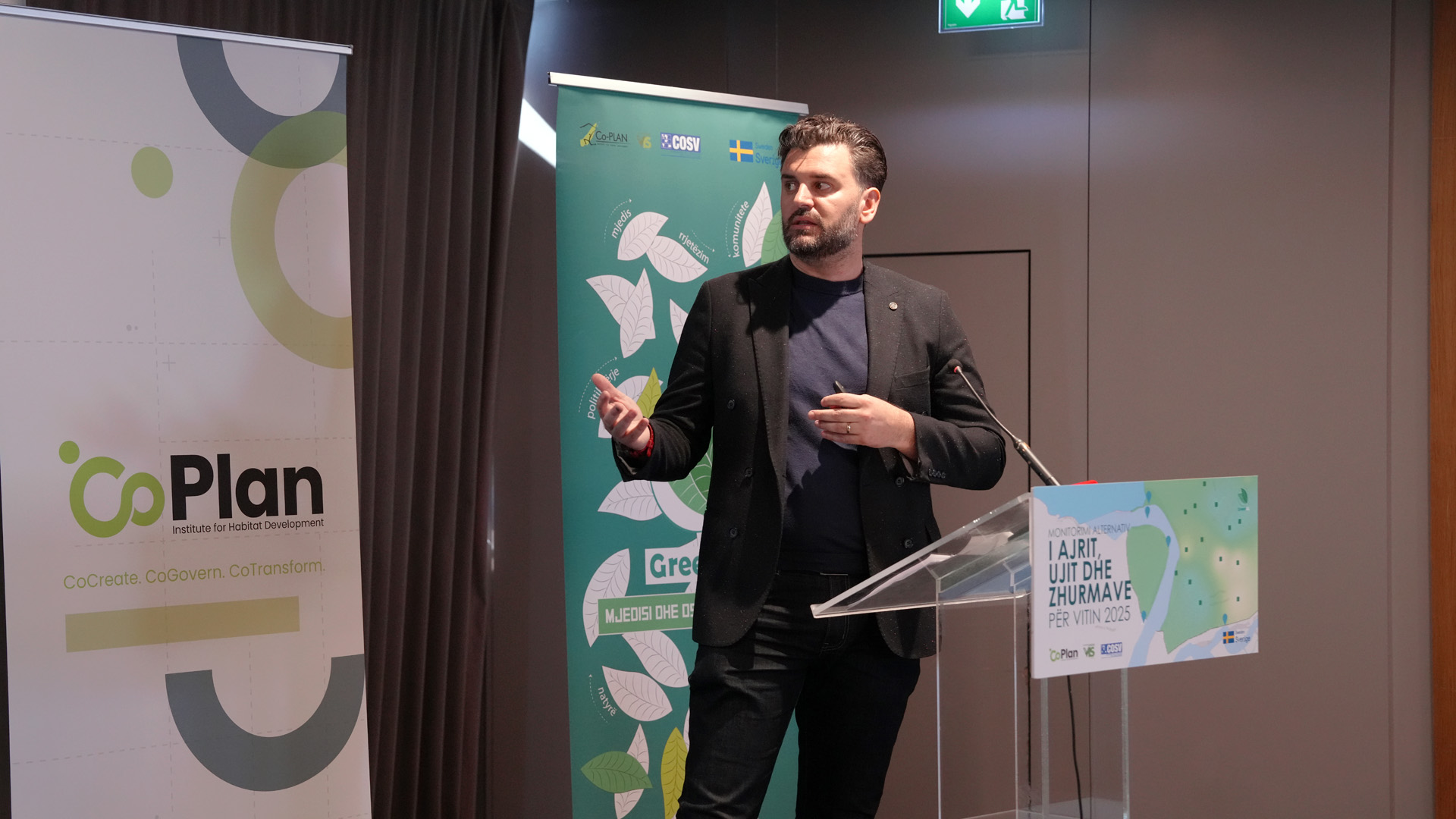
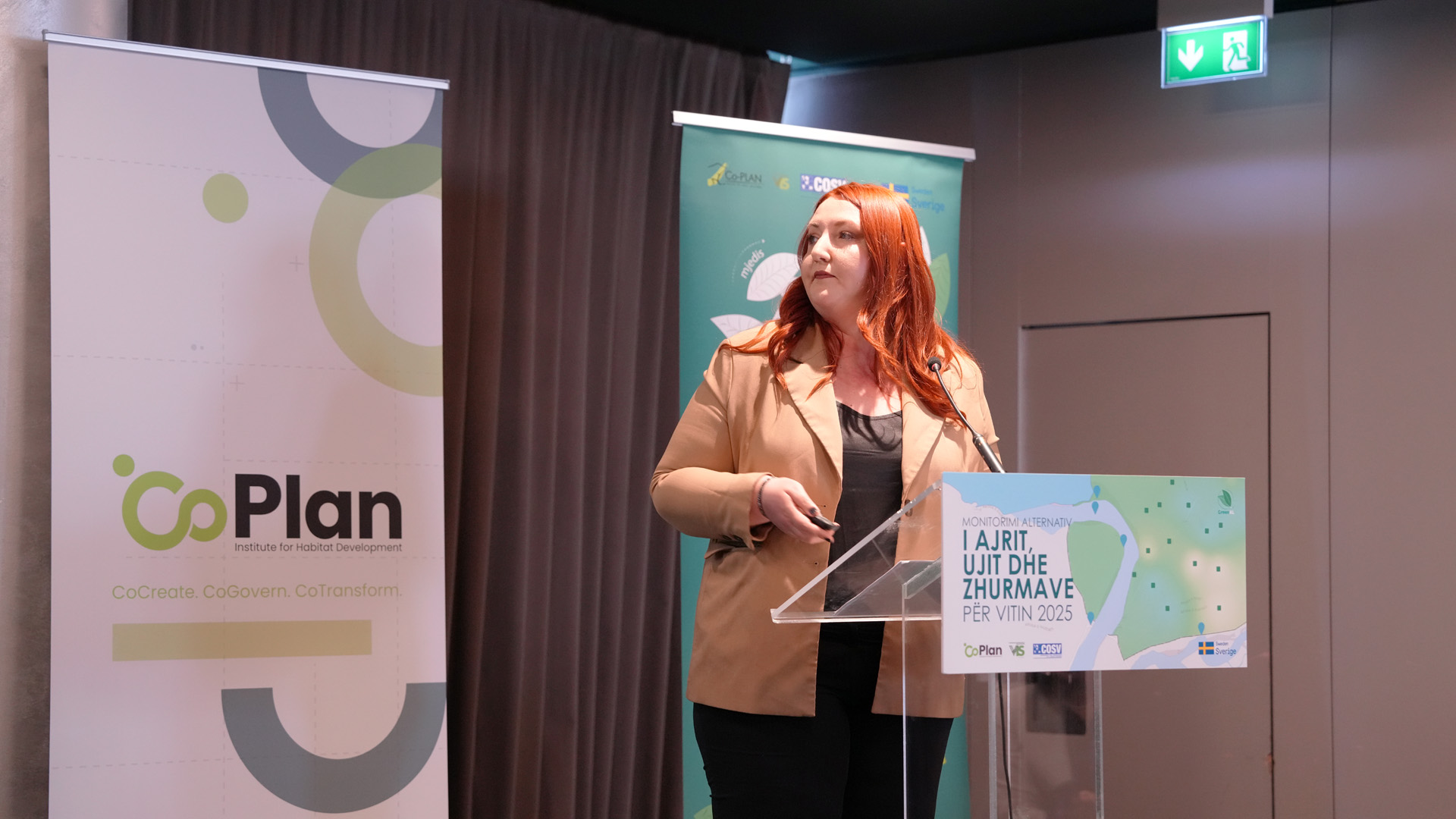
During the presentation event, welcoming remarks were delivered by the Ambassador of Sweden, H.E. Niklas Ström, the Deputy Minister of Environment, Mr. Gent Gazheli, and the Executive Director of CoPlan, Ms. Anila Bejko. The event also included several presentations and a panel discussion.
In her welcoming speech, the Executive Director of CoPlan, Ms. Bejko, stated:
This report today, much more comprehensive and broader in scope and thematic coverage, helps us make better decisions for our cities. It is the result of the work of the GreenAL colleagues and the contribution of a number of organizations supported within the framework of the project. It is also evidence of the GreenAL approach as a project that enables us to grow together, collaborate better with one another, and have a stronger voice as civil society in environmental decision-making.”
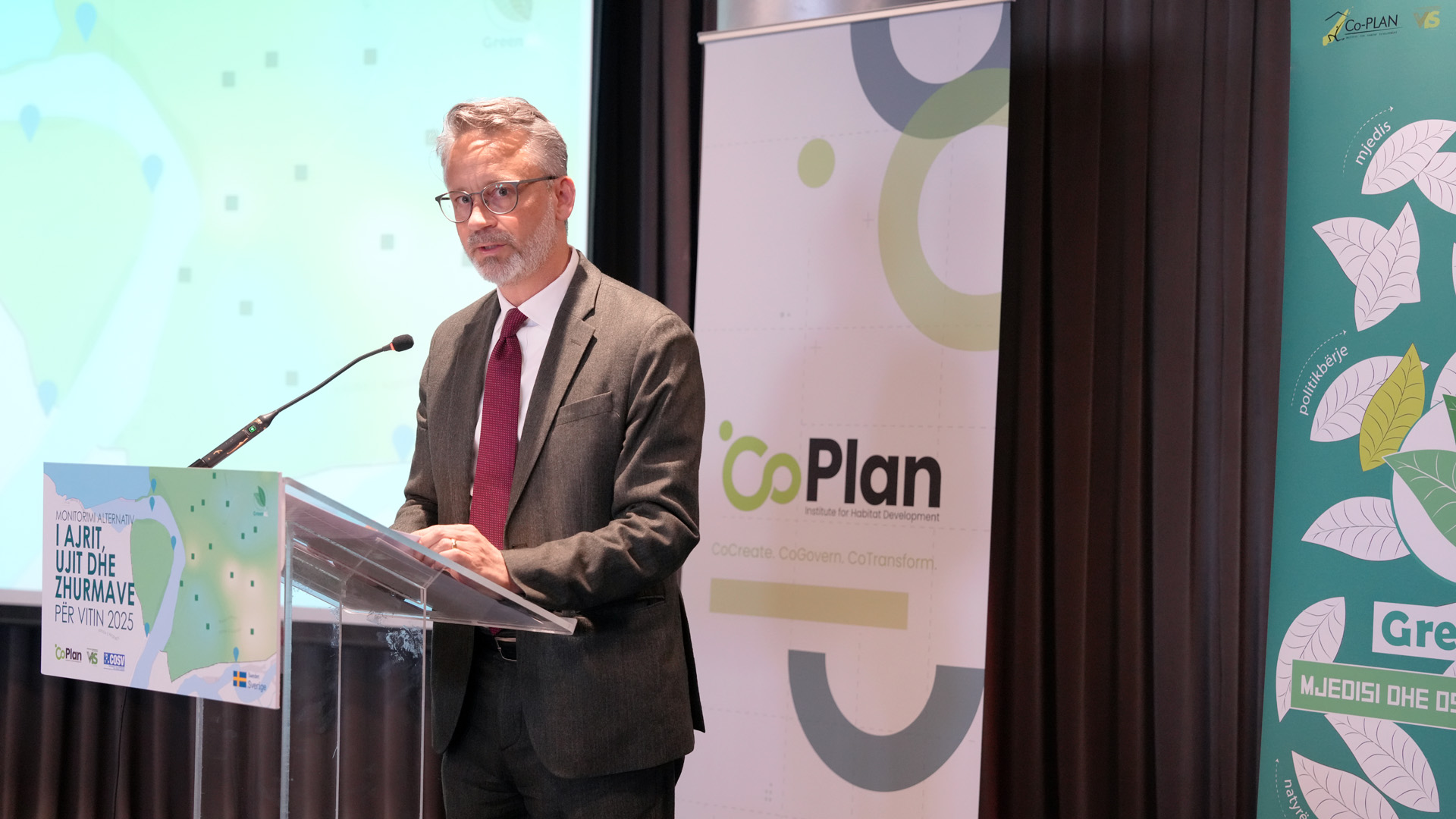
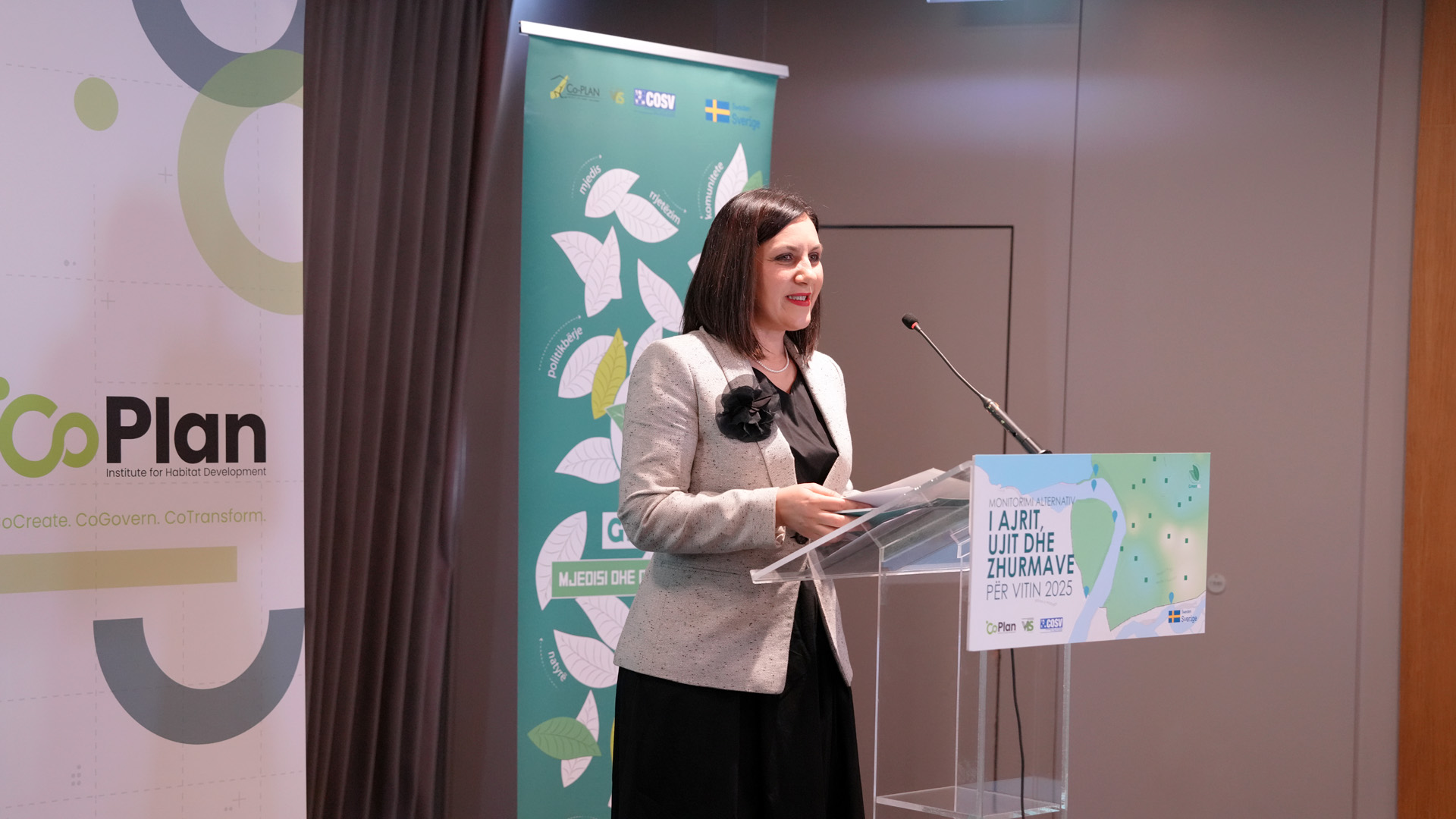
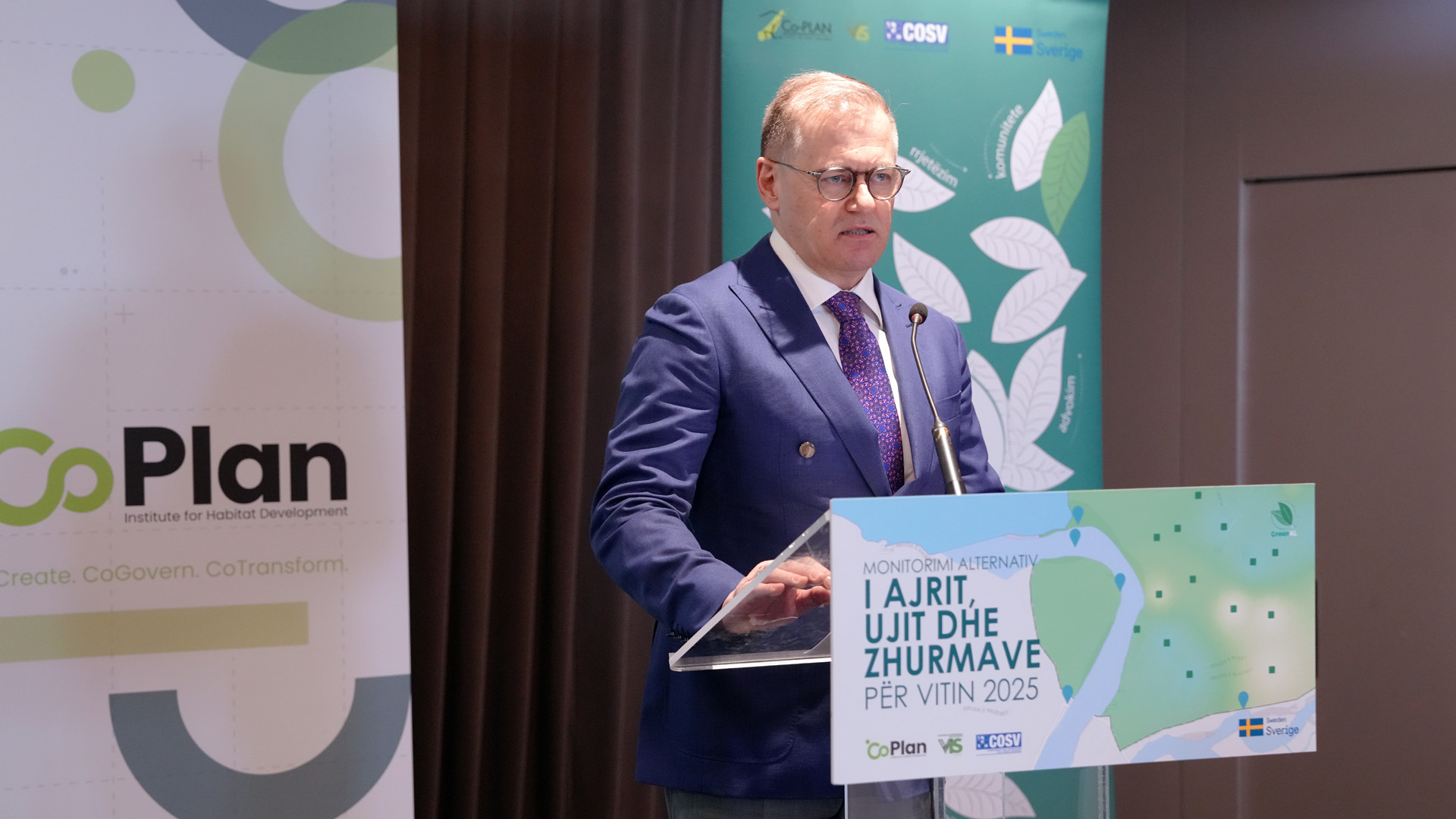



The alternative monitoring of air quality, acoustic pollution and water quality carried out during 2025 provides an expanded overview of the state of the urban environment in Albania and contributes to increased transparency and public awareness of environmental pressures affecting the health and well-being of communities.
In this regard, referring to some of the monitoring results, Ms. Bejko emphasized the necessity of data to inform policies in the interest of citizens. 66.7% of monitoring points in Tirana during the year exceed the reference value for nitrogen dioxide (NO₂), indicating a strong impact of road traffic and combustion sources in urban areas. At the same time, in Tirana, 98.3% of monitoring points are above the reference level for carbon dioxide (CO₂), reflecting the high intensity of urban activity and traffic in our cities.
Meanwhile, in many monitoring stations in the capital, noise levels exceed the indicative limit of 55 decibels during the day, and in some cases significantly higher levels have been recorded, above 80 decibels, indicating a widespread distribution of acoustic pollution across the analyzed territory.
Monitoring results show that the main environmental pressures in urban areas are primarily linked to road traffic, the intensity of urban development, construction activities, and in some cases historical industrial impacts. These factors directly affect air quality and noise levels, while in the case of water, pressures are mainly related to urban discharges, surface runoff and agricultural activities.
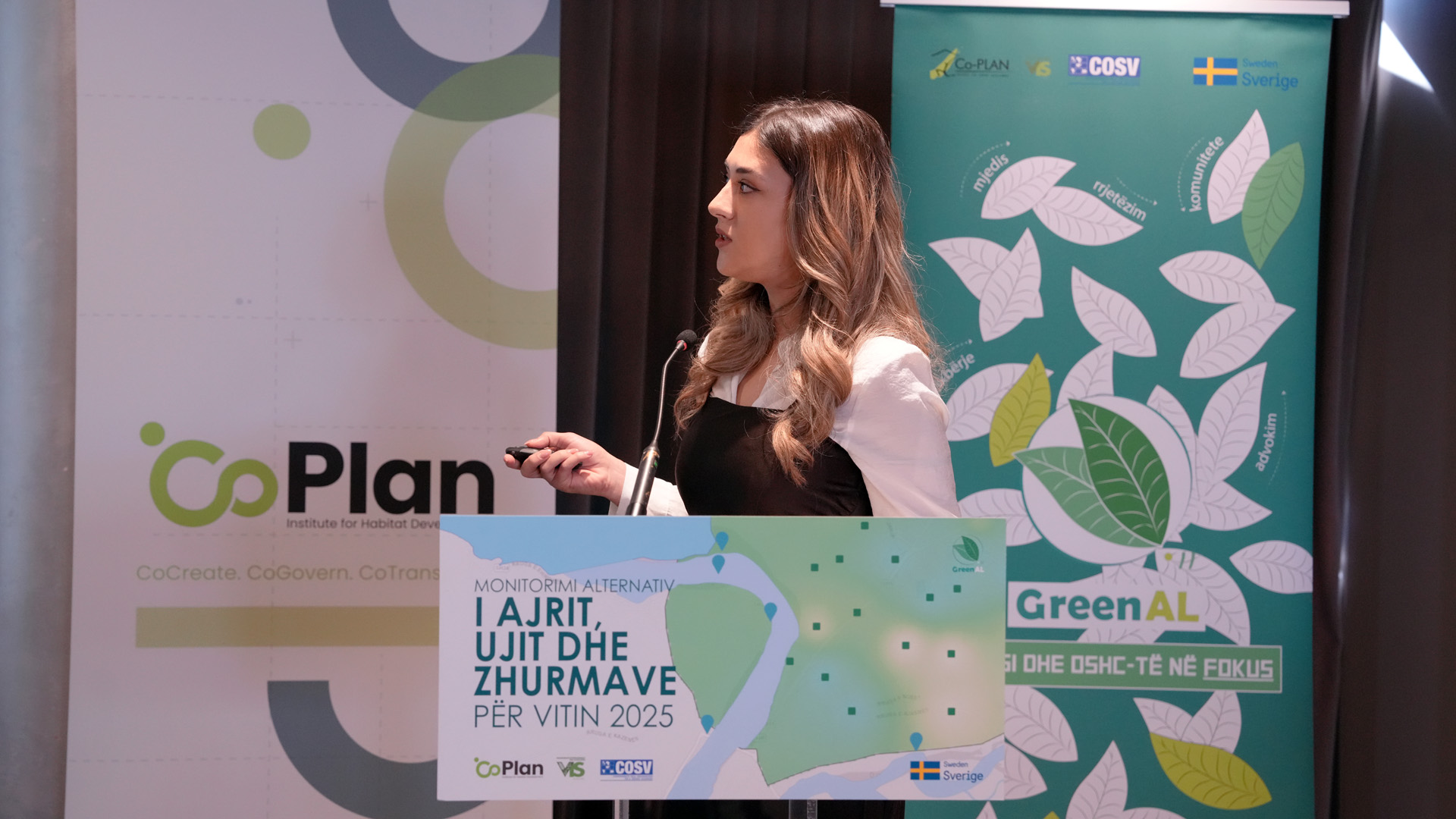



Air Quality in Albania
Air quality in the monitored cities shows an uneven distribution of pollutants, where some urban areas face higher concentrations due to traffic and development density. Among the analyzed pollutants, NO₂ and CO₂ emerge as the most widespread in urban areas, while fine particles with a diameter of 2.5 micrometers (PM2.5) and 10 micrometers (PM₁₀) show varying levels depending on the city and local pollution sources.
Data analysis in the Municipality of Tirana, where the largest number of measurements was conducted, shows that 1.3% of monitoring points exceed the reference standard for PM₂.₅, while no exceedance was recorded for PM₁₀. In contrast, the situation is significantly more problematic for traffic-related pollutants. For NO₂, around 66.7% of monitoring points exceed the reference value, while for CO₂ around 98.3% of points are above the reference threshold, reflecting the direct impact of urban traffic and economic activity.
In the Municipality of Durrës, 100% of points exceed the standard for PM₂.₅ and PM₁₀. At the same time, no exceedances were identified for NO₂, while 100% of points are above the reference threshold for CO₂. These results suggest a significant impact of suspended particles in the air, which may be linked to urban traffic, construction activities, and the influence of the port area.
In the Municipality of Elbasan, results show that no monitoring point exceeds the standard for PM₂.₅ and PM₁₀. However, for traffic-related pollutants, around 91% of points exceed the standard for NO₂, while around 95% are above the reference threshold for CO₂.
In the Municipality of Fier, around 73% of points exceed the standard for PM₂.₅ and around 79% for PM₁₀, while for NO₂ around 67% of monitoring points exceed the standard.
In the Municipality of Korçë, around 51% of points exceed the standard for PM₂.₅ and around 57% for PM₁₀, while for NO₂ around 21% of points exceed the standard.
In the Municipality of Shkodër, around 52% of points exceed the standard for PM₂.₅ and around 50% for PM₁₀. For NO₂ around 57% of points exceed the standard, while around 96% of points are above the reference threshold for CO₂.
Results from stationary monitoring using IQAir sensors also show seasonal variations in air pollution. In some monitoring points, increases in concentrations were observed during winter months, especially for PM₂.₅ and PM₁₀, which are linked to heating sources and atmospheric conditions that favor the accumulation of pollutants near ground level.
Monitoring was carried out following the Alternative Monitoring Methodology of the GreenAL project, based on the use of portable and stationary equipment for data collection in the field, as well as the involvement of citizens and local organizations in the environmental monitoring process.
Acoustic Pollution in Albania
Monitoring of acoustic pollution was conducted in parallel with air quality monitoring, at the same monitoring points and in two main time intervals: during the day and at night. Results show that acoustic pollution in the monitored cities is mainly linked to road traffic and urban activities.
In Tirana, the highest noise levels were recorded in areas with dense traffic such as the New Ring Road, Kavaja Street and the Wilson Square area. In Durrës, the most affected areas include Taulantia Street and urban segments near the city center. In Elbasan, higher noise levels were observed in central areas and along main urban circulation axes. In Fier, the most affected areas are the main road axes and central urban areas. In Korçë and Shkodër, the highest noise levels were mainly recorded in central areas and along roads with higher traffic flow.
Water Quality in Albania
Monitoring of water quality during 2025 was carried out in a number of water bodies across the country. Analyses included physical and chemical parameters such as water temperature, pH, dissolved oxygen, electrical conductivity, turbidity and concentrations of some main ions.
Results show a mixed situation of water quality, where some water bodies present parameters within acceptable ranges, while in some areas signs of pressure from anthropogenic activities have been identified. Among water bodies where higher pollution pressures were identified are segments of drainage canals in the Fier–Divjakë area, particularly the Roskovec–Hoxharë Canal (Vija e Ngjalës), as well as some points near the Tërbufi Emissary and canals connected to the drainage system of the area.
In these areas, increases in turbidity and electrical conductivity were observed, linked to the presence of sediments and surface runoff from agricultural activities. In some segments, changes in nutrient concentrations, particularly nitrates, were also observed, which may be related to the use of chemical fertilizers in surrounding agricultural activities and urban discharges. The increase of these parameters may contribute to eutrophication processes, negatively affecting the ecological balance of water bodies and aquatic biodiversity.
Overall Assessment
Overall, monitoring results show that road traffic remains the main source of environmental pressure in the monitored urban areas, directly influencing the increase in NO₂ and CO₂ concentrations and noise pollution levels. At the same time, the presence of green spaces and better urban ventilation is associated with lower pollutant levels, highlighting the importance of sustainable urban planning and the integration of nature-based solutions to improve urban environmental quality.
The expansion of the alternative monitoring network and the involvement of local communities in data collection represent an important step towards increasing transparency and public awareness of environmental pressures. The data generated through this process can serve as an important source of information for local and national institutions in designing policies and measures to reduce pollution and improve quality of life in cities.
Monitoring and the event are carried out under the GreenAL project “Supporting Civil Society Environmental Organizations 2024 – 2027” is funded by the Swedish International Development Cooperation Agency (Sida) with funds from the Swedish Government, implemented by Co-PLAN, Institute for Habitat Development, in collaboration with VIS Albania and COSV – Cooperazione per lo Sviluppo.