City for Citizens, Citizens for City
The project City for Citizens, Citizens for City encourages active European citizenship, through local level forms of civic engagement.
The project “Monitoring the Implementation of Local Budgets in the Municipalities of Fier and Shkodër” focused on transparency and accountability of finances on a local level.
The Albanian-American Development Foundation, working in conjunction with the Municipality of Tirana in a project aiming the development of an Exemplar Mixed Use Quarter at New Bazaar and Avni Rustemi Square, Tirana.
Co-PLAN, in collaboration with the Institute for International Urban Development (I2UD), are implementing the Social Sustainability and Citizen Engagement (SSCE) project, under the Urban Partnership Program (UPP II).
Co-PLAN continued with the implementation of the second phase of the “development of the ENV.net platform in the Western Balkans and Turkey: giving citizens a voice to influence the environmental process reforms for closer EU integration”.
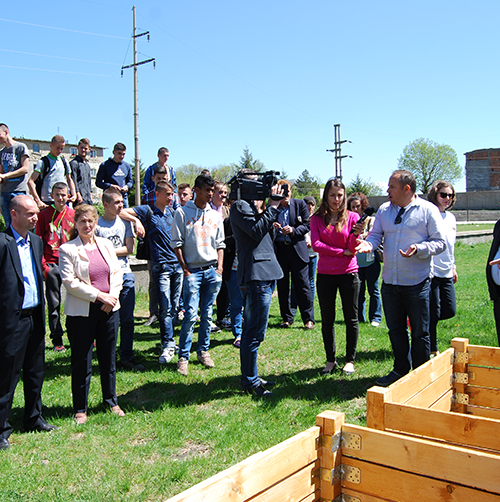
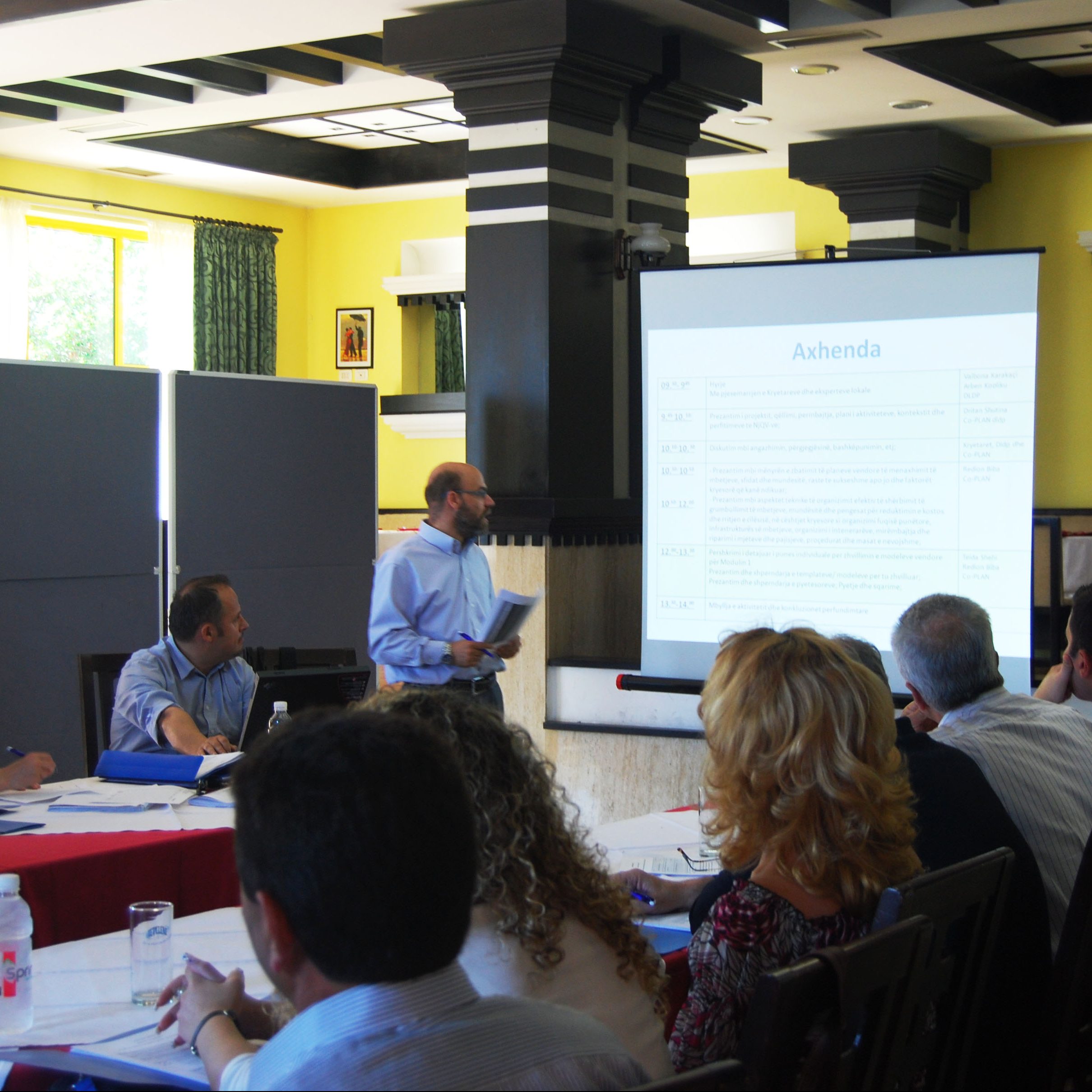
Co-PLAN was contracted by HELVETAS Swiss Intercooperation (HSI Albania) to support 6 LGUs from Shkodra and Lezha Qarks through implementation of the Waste Management Component, in the framework of the Phase 2 of dldp program, during the period April – December 2012.
“Developing and Adapting Professional Programs for Energy Efficiency in the Western Balkans” is an EACEA Tempus project, officially launched in January 2014, marking a first for Albania since this is the first TEMPUS project to have an Albanian lead partner, namely POLIS University.
Revival of City squares in Balkan cities reflects on a new creative idea of the public spaces questioning people who use and live that spaces about values and problematic to re-use in order to create new vibrant, creative and livable spaces to use as city squares.
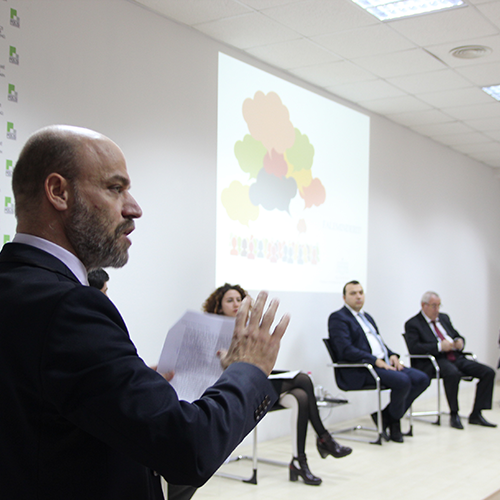
The project consisted in organizing a series public debates on matters concerning public spaces, such as private property and the right to develop, neighborhood development schemes, the pressure of urban development and protected heritage sites, etc.
During 2012, Co-PLAN undertook a project to assess the situation regarding local government borrowing in Albania. With the support of OSFA, and in partnership with the MoF, Co-PLAN worked on assessing the situation concerning the LGUs’ borrowing trends and possibilities…